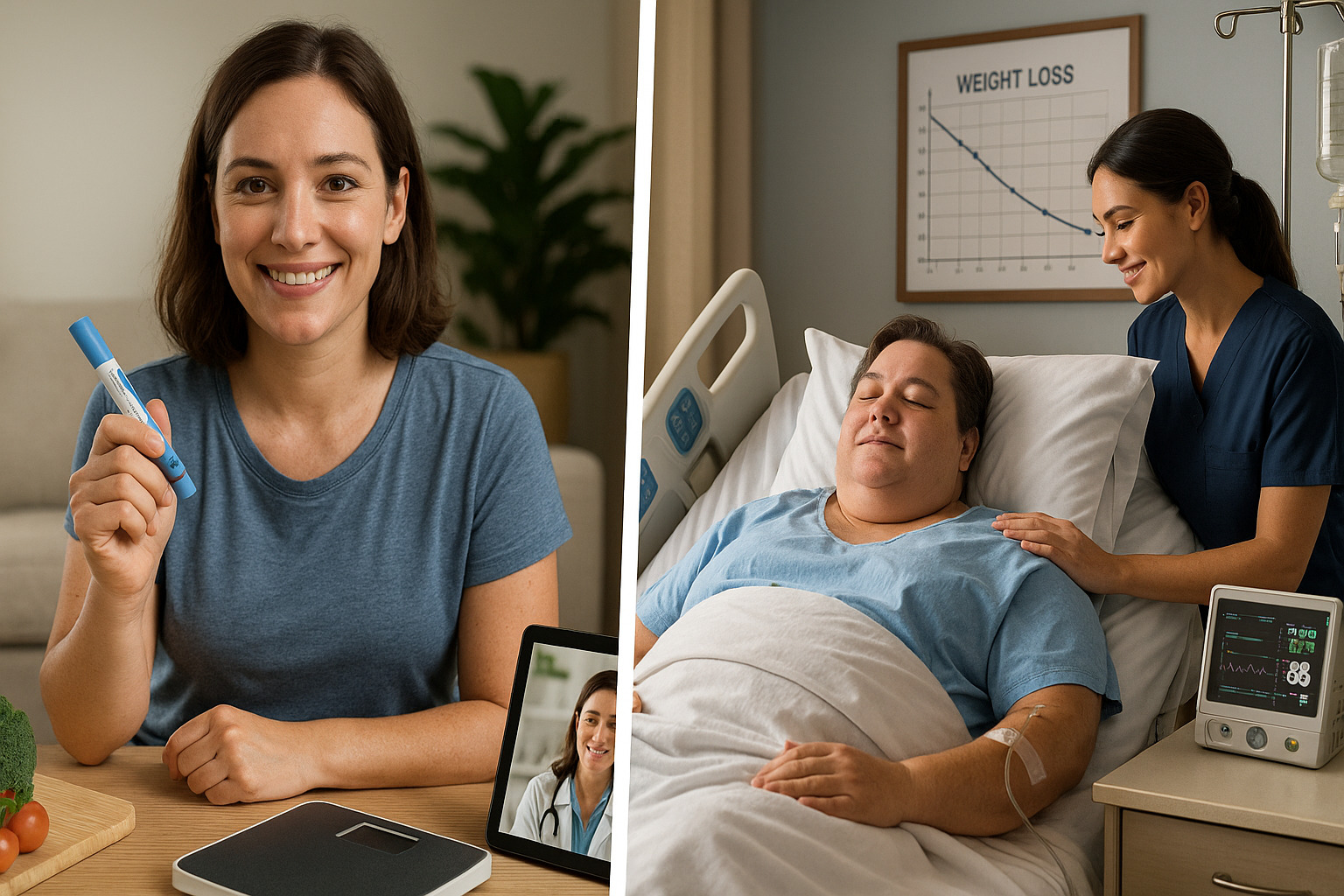
When facing significant obesity, patients often ask whether to try GLP-1 weight-loss medications (like Ozempic, Wegovy, or Mounjaro) or opt for bariatric surgery (such as gastric bypass). Both approaches can yield dramatic results, but they differ in how they work, how much weight they can help you lose, and what risks and costs are involved. In short, GLP-1 drugs (semaglutide, tirzepatide, etc.) are non-surgical, injection-based therapies that curb appetite and slow digestion, while bariatric surgery physically shrinks the stomach and/or reroutes the intestines to restrict food intake. Below we break down the definitions, benefits, and trade-offs of each option.
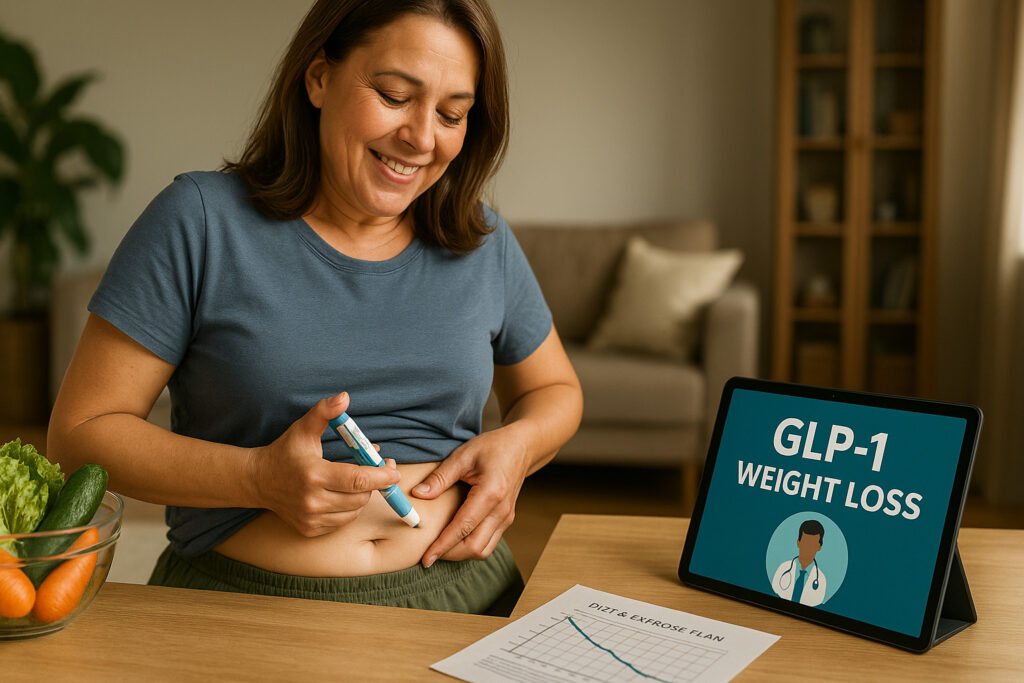
GLP-1 (glucagon-like peptide-1) agonists are prescription drugs originally developed for diabetes that also promote weight loss. Examples include semaglutide (brand names Ozempic for diabetes; Wegovy for weight loss) and tirzepatide (brand names Mounjaro for diabetes; Zepbound for weight loss). These medications mimic a natural gut hormone that stimulates insulin release and slows stomach emptying. By acting on brain and gut receptors, they suppress appetite and help you feel full sooner.
Clinical trials show that when combined with diet/exercise, GLP-1 drugs can lead to substantial weight loss. For example, one review of semaglutide’s major trials (the STEP studies) found an average weight loss of 15–17% of body weight over ~68 weeks. Even higher losses are seen with tirzepatide – one analysis reported an average 21% weight loss with tirzepatide. (In other words, a 200-pound person might lose 30–40 pounds on these medications.) Wegovy and Mounjaro results often rival what was historically possible only with surgery.
GLP-1 therapy is delivered via injections (typically once weekly) or even oral pills in lower doses. It is non-invasive – no hospital stay or incisions are required. Most patients start on a low dose and gradually increase to minimize side effects. Common side effects are gastrointestinal: nausea, vomiting, diarrhea or constipation, and sometimes stomach pain. These usually improve over time. Serious risks are rare but include pancreatitis, gallstones, or thyroid issues (mostly observed in animal studies). Unlike surgical risks, GLP-1 drug side effects are generally reversible by lowering the dose or stopping the medication.
Bariatric (metabolic) surgery includes procedures like Roux-en-Y gastric bypass and sleeve gastrectomy. These operations physically shrink the stomach (and in the case of bypass, reroute the intestines) so that you eat much less food. Bariatric surgery is major surgery requiring general anesthesia and typically 1–2 days in the hospital, followed by several weeks of recovery. It is generally recommended for patients with BMI ≥ 40 (or ≥ 35 with serious comorbidities) who have tried diet and exercise without success.
Surgery changes anatomy permanently. Gastric bypass and sleeve cannot easily be “undone” – they create a small stomach pouch (about the size of a walnut) or remove most of the stomach. Patients must then adhere to lifelong dietary changes and vitamin supplements. Because the stomach is smaller, people feel full with much less food. The weight loss is often rapid and dramatic: within 6–12 months after bypass or sleeve, many patients lose 25–35% or more of their body weight. These losses are typically greater than what GLP-1 drugs alone produce. Indeed, a large US study found that after two years, bariatric patients lost about 24% of their weight vs. only about 5% for patients on GLP-1 drugs in practice.
The trade-offs are higher risk and cost. Short-term surgical complications include bleeding, infection, blood clots, leaks at the surgical site, and anesthesia risks. Long-term complications can include nutritional deficiencies (iron, B12, calcium, vitamin D), dumping syndrome (nausea or diarrhea from rapid eating), hernias, and others. Deaths are rare but can occur. On the positive side, bariatric surgery has been shown to improve or even resolve diabetes, high blood pressure, and sleep apnea in many patients. However, it is irreversible – once the anatomy is changed, that’s permanent, so careful commitment to diet and follow-up is required.
| Factor | GLP-1 Medications | Bariatric Surgery |
| Method | Non-surgical pharmacotherapy (weekly injections or pills) | Surgical (stomach reduction +/- intestinal bypass) |
| Typical Weight Loss | ~10–20% of body weight in trials (up to ~20–25% with tirzepatide) | ~25–35% or more of body weight |
| Onset & Duration | Gradual (months to full effect); requires ongoing use to maintain | Rapid initial (months); long-term change with dietary permanence |
| Recovery Time | None (no hospitalization) | 1–2 days hospital + weeks of recovery |
| Risks/Side Effects | GI effects (nausea, diarrhea, constipation); rare pancreatitis/gallstones | Surgical risks (bleeding, infection, clots); malnutrition/dumping |
| Reversibility | Reversible (stop drug if needed) | Generally irreversible (anatomic change); some procedures (gastric band) are removable |
| Cost (approx.) | High ongoing cost: ~$1,300/month (Wegovy) ≈ $16k/year | High one-time cost: ~$22k–$33k (average U.S.) |
| Other Notes | Often improves diabetes and cardiovascular risk factors | Often resolves diabetes and other comorbidities |
As this table shows, bariatric surgery typically yields larger weight loss, but at the expense of a major operation and permanent changes. GLP-1 drugs are less invasive and reversible, with weight losses that are significant (comparable to older procedures like gastric banding) and safer side-effect profiles. For example, World Obesity Federation notes tirzepatide averages ~21% weight loss, the highest of any current drug. By contrast, a recent real-world study found that sleeve or bypass led to about 5× the weight loss of GLP-1 injections over 2 years (58 lbs vs 12 lbs on average).

In summary, GLP-1 drugs are much safer and less invasive than surgery, but require medical supervision and adherence. Surgery is more aggressive, offering greater weight loss and metabolic benefits for those who need them, but it also requires a serious commitment and involves more risk.
Cost and insurance coverage are key considerations. GLP-1 medications are expensive if paid out-of-pocket: brand Wegovy, for example, runs about $1,350 per month (over $16,000 per year) without discounts. Many patients rely on insurance coverage or manufacturer savings programs to afford them. In contrast, bariatric surgery is a one-time cost but usually tens of thousands of dollars up front (studies report averages around $22k–$33k in the U.S. for common procedures). Some insurances cover bariatric surgery if medical criteria are met, but not everyone has that benefit.
Recovery time and lifestyle must also be weighed. With GLP-1 drugs, you typically begin to lose weight over a few months and continue as long as you remain on therapy. There’s no “downtime” – you simply inject yourself at home and maintain regular medical follow-ups. Bariatric surgery, by contrast, requires pre-operative preparation and at least a week or more of modified diet and rest afterward. After surgery you must commit to a new eating plan (small portions, chewing thoroughly) and take vitamins for life.
A practical advantage of GLP-1 therapy is accessibility: many telemedicine clinics (like Daytryp RX) now offer online consultations and affordable compounding options for these injections. For patients unwilling or unable to undergo surgery, GLP-1 drugs represent a highly effective first-line therapy.
Ultimately, the “better” choice depends on the individual. Patients with extremely high BMI or severe diabetes may benefit more from surgery’s powerful effects, especially if rapid and sustained loss is needed. Those who fear surgery or have only moderate obesity often start with GLP-1 medications (sometimes along with diet/exercise) because it’s safer and reversible. In fact, experts recommend considering GLP-1 drugs first for many obese patients, reserving surgery for cases where medications fail to achieve goals.
It’s important to have an open dialogue with your healthcare provider. For example, guidelines say GLP-1 therapy is indicated for anyone with BMI ≥30 (or ≥27 with complications) and should be used long-term to prevent weight regain. Meanwhile, bariatric surgery is typically reserved for BMI ≥40 or ≥35 with serious comorbidities. Insurance coverage and personal preferences also play a role.
Patients report success with both approaches. Anecdotally, many who chose GLP-1 therapy find it life-changing: for instance, one Daytryp patient noted that obtaining compounded semaglutide through their program was “incredibly easy” and made them “very happy” with their results. Other patients who underwent surgery report similarly dramatic changes, but often mention the intensity of recovery.
Both GLP-1 drugs and bariatric surgery can produce impressive weight loss, but they suit different situations. Surgery remains the most powerful tool – it “outperforms” medications in terms of raw weight loss – but at the cost of invasiveness and permanence. GLP-1 medications like Ozempic (semaglutide) or Mounjaro (tirzepatide) offer an excellent first-line alternative for many patients: they achieve significant fat loss (often in the 10–20% range) with much lower risk.If you’re considering your options, talk with a specialist. For example, Daytryp RX’s physician-guided programs for semaglutide and tirzepatide provide personalized dosing, regular follow-ups, and lifestyle coaching (all via telehealth) to help you lose weight safely. These programs have helped thousands achieve healthier lifestyles. By starting with a less invasive therapy like GLP-1 agonists, you often get most of the benefit of surgery with far fewer downsides. Explore Daytryp’s GLP-1 weight loss programs (semaglutide or tirzepatide) to learn how medical support and convenient access can kickstart your weight loss journey. Whether you choose medication or surgery, the goal is the same: safer, sustained weight loss and better health.
